
 Connect with Google
 Connect with Facebook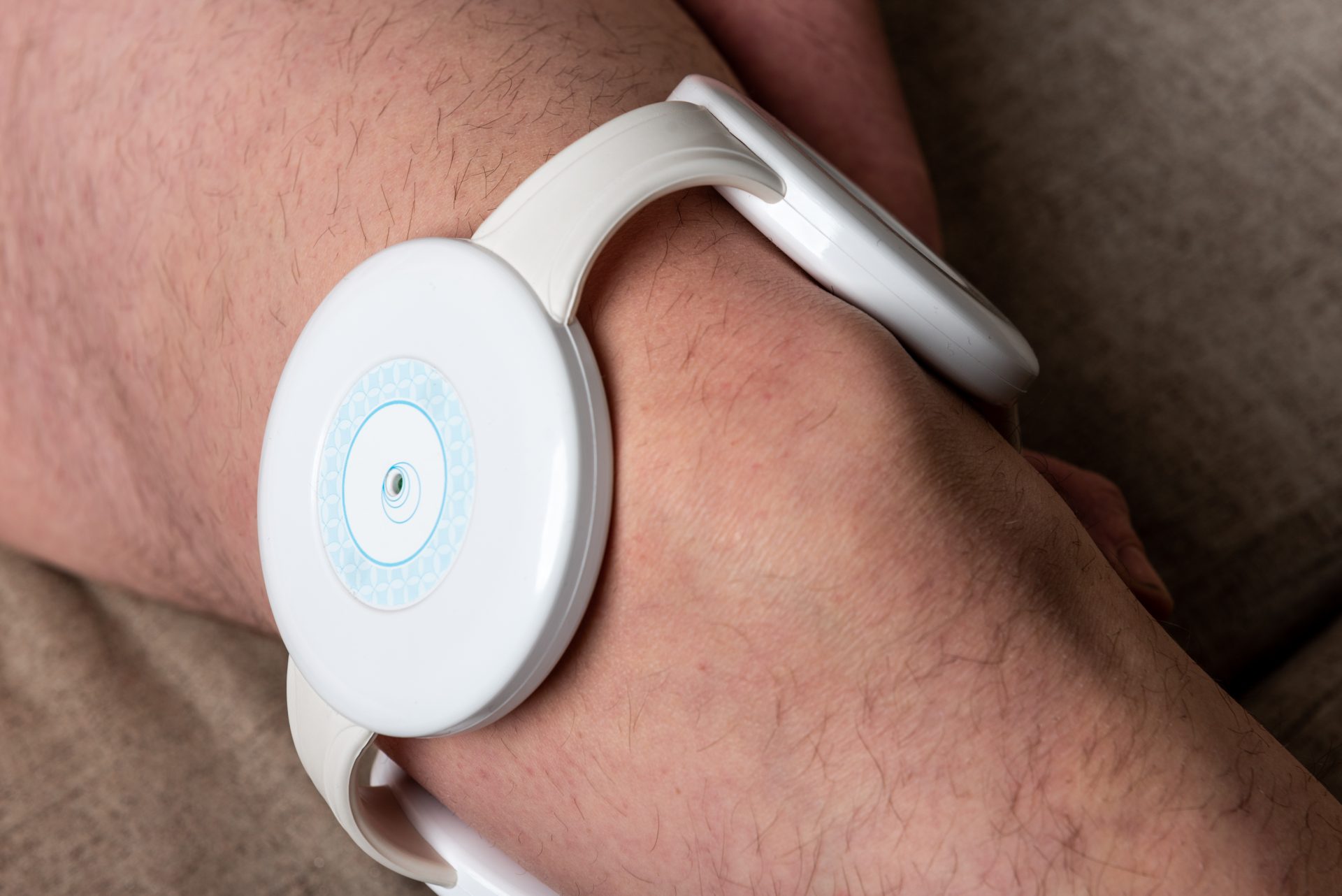
3D Printing biocompatible materials
Biocompatible 3D printing for prosthetics, orthotics, and wearable medical devices.
Login
If you have any trouble logging in to your account, contact us.
Sign Up
To start 3D printing or Laser Cutting, you'll need to create an account here. Once done, you'll be able to upload your files and get live quotes of yours parts
Already have an account? Log In
Home » 3D printing by industries » FDA approved 3D printing materials in medical devices
Interest in FDA-approved 3D printed medical devices continues to grow as additive manufacturing moves from prototyping into regulated medical production. What was once mainly used for concept models and rapid iteration is now increasingly integrated into healthcare workflows for surgical guides, dental devices, orthotics, prosthetics, anatomical models, and even implantable applications.
As adoption increases, so does the complexity of regulation. Many companies entering the medical additive manufacturing space quickly realize that regulatory compliance is often more challenging than the printing technology itself.
One important clarification comes first: there is rarely such a thing as a universally “FDA-approved 3D printer.” In practice, the Food and Drug Administration (FDA) regulates the final medical device and the validated workflow used to manufacture it. That includes software, material selection, process validation, manufacturing controls, post-processing, traceability, and intended use.
The FDA also distinguishes between clearance and approval. Many Class II medical devices reach the market through 510(k) clearance, a regulatory submission made to the Food and Drug Administration (FDA) to demonstrate that a new medical device is substantially equivalent to an already legally marketed device, often called a predicate device. Higher-risk Class III devices typically require Premarket Approval (PMA), a more rigorous FDA review process generally reserved for implantable or life-sustaining products.
Success in medical 3D printing is not simply about owning the right printer. It depends on building a controlled, traceable, and compliant manufacturing ecosystem capable of producing consistent medical-grade parts.
One of the biggest sources of confusion in medical manufacturing comes from mixing together device classifications and material standards.
In the United States, the FDA classifies final medical devices according to risk. In Europe, the European Union Medical Device Regulation (EU MDR) follows a similar logic by defining classes based on intended use and patient risk.
By contrast, standards such as the United States Pharmacopeia (USP) and ISO 10993 focus on the biological safety and biocompatibility of the materials used in those devices.
This means that FDA and EU MDR classifications determine how the final product is regulated, while USP and ISO standards help determine whether the material itself is suitable for medical applications.
For example, a material may meet USP Class VI or ISO 10993 requirements while the final medical device still requires extensive validation before commercialization. Material qualification alone does not guarantee regulatory approval of the finished device.
Understanding this distinction is particularly important for companies working internationally, where both U.S. and European regulatory frameworks may apply simultaneously.
The FDA divides medical devices into three primary categories.
Class I devices are considered low risk and are often subject to lighter regulatory requirements. Class II devices represent moderate-risk products and commonly require 510(k) clearance. Class III devices are the highest-risk category and generally require Premarket Approval (PMA) due to their critical medical role.
Most current commercial opportunities in 3D printed medical devices fall within the Class II category. Surgical guides, patient-specific tools, orthotic devices, and dental applications often follow this pathway.
This is why the phrase “FDA-approved 3D printed medical devices” can sometimes be misleading. In reality, many products are FDA-cleared rather than fully PMA-approved. While both pathways are rigorous, they are designed for different levels of medical risk.
For MedTech companies, using the correct terminology is important not only for compliance, but also for maintaining credibility with hospitals, regulators, and investors.
While the FDA governs the U.S. market, Europe follows a different regulatory structure.
The European Union Medical Device Regulation (EU MDR) regulates medical devices sold within the European Union and places strong emphasis on risk management, traceability, and clinical evaluation.
At the same time, the International Organization for Standardization (ISO) 10993 framework is widely used to evaluate biocompatibility and biological safety. Unlike USP classifications, which focus primarily on the material itself, ISO 10993 evaluates materials according to their intended use, duration of contact, and interaction with the human body.
This means European compliance often requires a broader evaluation of:
For companies operating globally, understanding both FDA and EU MDR expectations is essential for building scalable regulatory strategies.
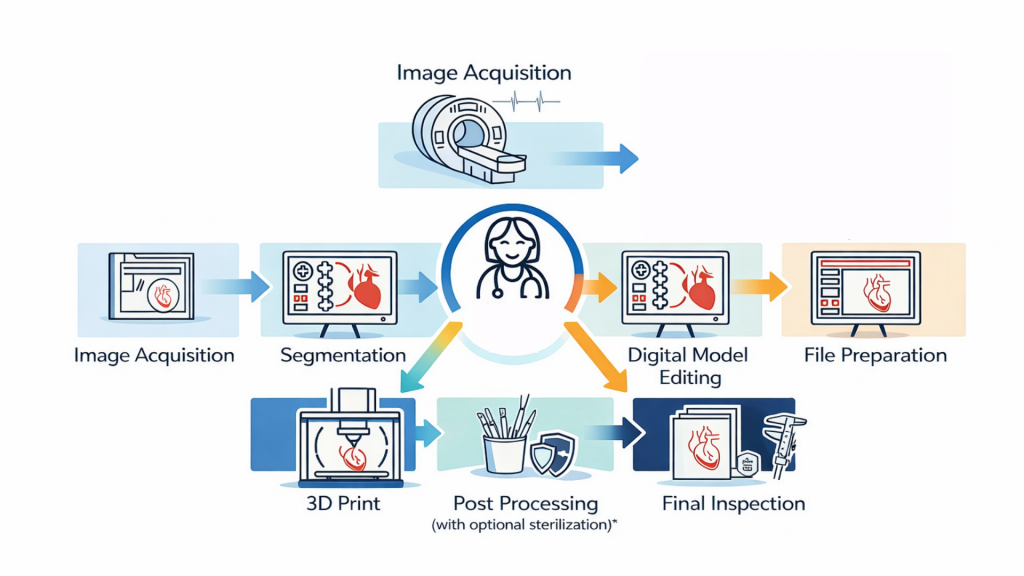
One of the most important concepts in medical additive manufacturing is that regulators evaluate an entire validated workflow rather than a standalone machine.
Recent FDA clearances for 3D printed PEEK cranial implants demonstrate this clearly. These approvals are generally granted to integrated manufacturing systems that combine validated software, materials, printers, and process controls into a repeatable workflow.
For manufacturers, this means that repeatability and documentation matter just as much as printing capability.
A company may successfully print one functional prototype, but regulated production requires demonstrating that the same result can be achieved consistently under controlled conditions.
This is one of the reasons industrial additive manufacturing environments are often more suitable for regulated production than fragmented desktop printing setups.
Material selection plays a central role in the development of compliant medical devices.
Advanced materials such as PEEK continue to gain attention for implantable applications because they combine high mechanical strength, biocompatibility, and radiolucency. Unlike metals, PEEK does not interfere with medical imaging, making it highly relevant for cranial and orthopedic applications.
At the same time, biocompatible resins are opening new opportunities in dental and patient-specific applications where precision and surface quality are essential.
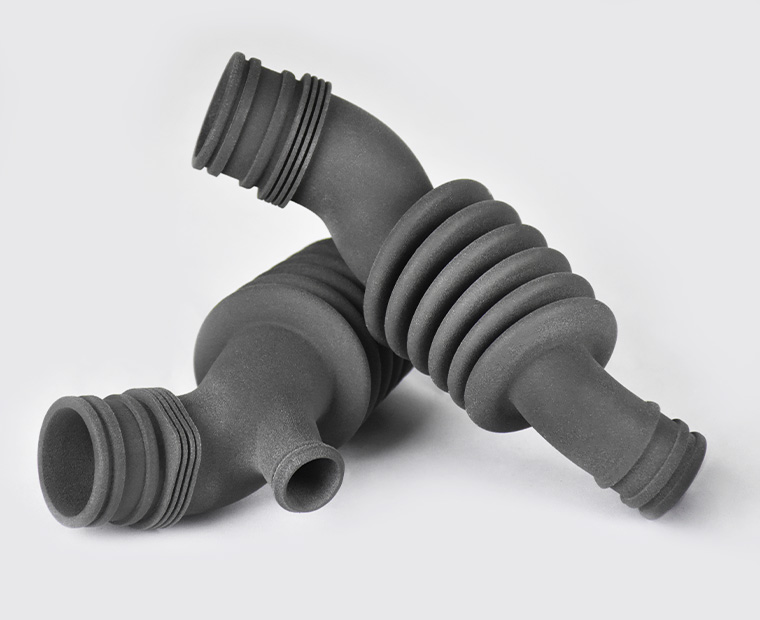
Biocompatible 3D printing for prosthetics, orthotics, and wearable medical devices.
For many non-implantable devices, polymers such as PA11, PA12, Polypropylene (PP), and TPU remain highly relevant. These materials are commonly used for orthotics, prosthetics, surgical tools, wearable medical devices, and external medical components.
At Sculpteo, these materials are integrated into an ISO 13485-certified manufacturing environment, helping support applications where quality control, repeatability, and traceability are critical.
For companies targeting FDA-cleared or FDA-approved 3D printed medical devices, the path to market typically begins with design control and classification. The team must determine intended use, product classification, and the likely submission path. From there, material selection becomes critical. For patient-contact applications, manufacturers often need to work with ISO 10993-aligned biocompatibility considerations as part of the broader evidence package, while the quality system must support repeatable production and proper documentation. FDA’s additive manufacturing guidance emphasizes device design, manufacturing process controls, and device testing as core technical pillars.
Then comes process validation. In a regulated environment, it is not enough to print one good part. Manufacturers must demonstrate that the process consistently produces compliant parts over time. This is where frameworks such as Installation Qualification (IQ), Operational Qualification (OQ), and Performance Qualification (PQ) become important. While the exact evidence package depends on the device type and submission route, the underlying principle is always the same: prove that the workflow is controlled and repeatable.
Finally, all of that evidence has to support the submission itself. For a 510(k) clearance, the device sponsor must show substantial equivalence to a predicate device. For higher-risk products, the burden can be greater. In both cases, the manufacturing partner’s documentation can directly affect the strength and speed of the submission.
Sculpteo’s medical positioning is particularly relevant for teams that need more than prototyping. Its messaging emphasizes precision, quality, and compliance in an ISO 13485-certified factory, and its certification announcement states that the company’s certified scope covers Class I and Class IIa medical devices. Sculpteo also highlights material and process control, documentation, and regulatory alignment as part of its medical manufacturing approach.
Not all 3D printing services are suited for the demanding needs of healthcare. Quality, precision, and material certification are essential.
At Sculpteo, we bring:
ISO-certified processes ISO 13485 ensuring reliability and consistency.
Expertise in medical 3D printing with access to medical-grade materials.
On-demand production for hospitals, universities, and research labs needing fast turnaround.
Whether you need a single organ replica for training or a complete set of anatomical parts for clinical trials, we adapt to your project’s scale and complexity.
The real story behind FDA approved 3D printed medical devices is not about a single machine receiving a universal green light. It is about the entire validated manufacturing chain: classification, intended use, software, material, process controls, quality documentation, and traceability.
That is why the smartest path is often not to build everything internally. For many MedTech teams, especially those navigating 510(k) clearance, Class II medical devices, or regulated custom production, the safer route is to work with a manufacturing partner that already understands controlled production. With its ISO 13485-certified medical capabilities, Sculpteo is well positioned to support that “contract manufacturing” path and help companies move from concept to compliant production with greater confidence.
In many cases, it is more accurate to say FDA-cleared 3D printed medical devices. Class II devices often reach market through 510(k) clearance, while Class III devices generally require Premarket Approval (PMA). The correct wording depends on the regulatory pathway used for the device.
Not in a blanket sense. The FDA focuses on the medical device and its validated workflow, not just the printer alone. That is why software, materials, manufacturing controls, and intended use all matter in the submission
Yes. One recent example is the 3D-printed PEEK cranial implant announced by 3D Systems in 2024, which the company described as the first FDA-cleared additively manufactured PEEK implant for cranioplasty.
ISO 13485 is the internationally recognized quality management standard for medical devices. It helps demonstrate that the manufacturing environment is structured around traceability, control, and regulatory compliance
Because printing in-house can shift major regulatory and quality responsibilities onto the healthcare facility or device developer. Working with a specialized manufacturing partner can reduce that burden and provide a more robust quality framework for regulated production.
Get the latest 3D printing news delivered right to your inbox
Subscribe to our newsletter to hear about the latest 3D printing technologies, applications, materials, and software.