
 Connect with Google
 Connect with Facebook
HP Metal Binder Jetting Discover the technology
Discover Binder Jetting, and start making the most of metal 3D printing for your next projects.
Login
If you have any trouble logging in to your account, contact us.
Sign Up
To start 3D printing or Laser Cutting, you'll need to create an account here. Once done, you'll be able to upload your files and get live quotes of yours parts
Already have an account? Log In
Discover Binder Jetting, and start making the most of metal 3D printing for your next projects.
Binder Jetting is an additive manufacturing method that creates parts additively with a binding agent. The process uses a liquid binding agent deposited on the metal powder material, layer by layer, according to your 3D model.
In the bustling landscape of modern manufacturing, metal binder jetting stands out as a game-changer, poised to revolutionize the way we create metal parts. This innovative approach to additive manufacturing promises not just increased efficiency but also an unprecedented level of precision and versatility. As engineers, designers, and manufacturers explore new frontiers in metal fabrication, the lure of metal binder jetting becomes increasingly appealing. Its ability to produce complex geometries with minimal waste makes it an alluring prospect for industries striving for sustainability and innovation.
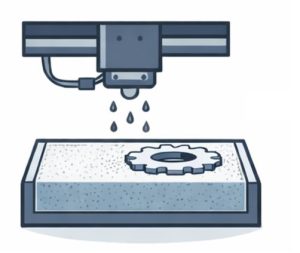
Printing
Binder is selectively jetted to shape the part layer by layer in a metal powder bed.
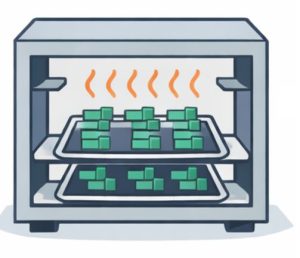
Debinding
The binder is removed to leave a fragile, porous metal structure.
(called the green part)
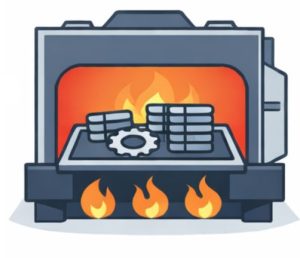
Sintering
The part is densified at high temperature to form solid metal.
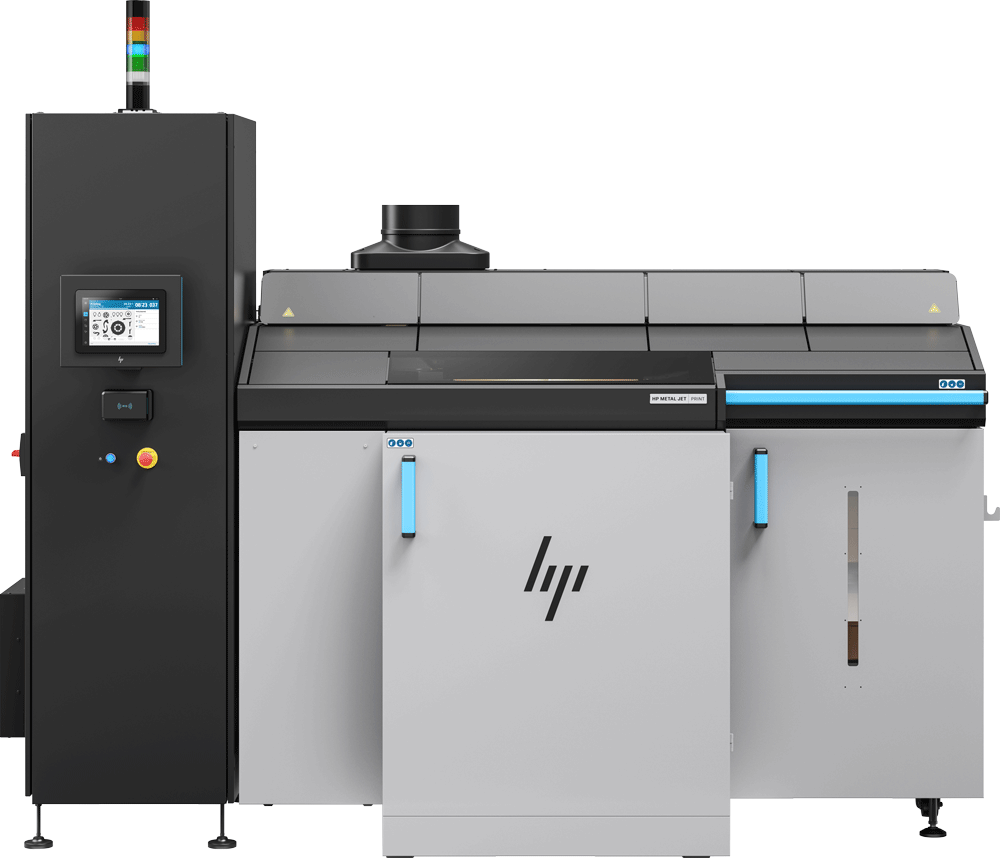
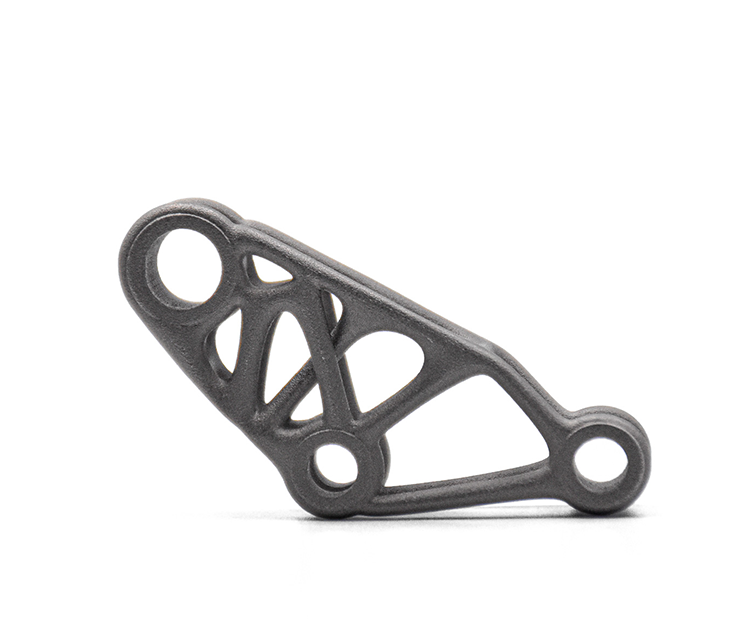
The Metal Jet S100 : Source : HP
HP Binder jetting technology lays the foundation for a new era in manufacturing, where innovation meets practicality. At its core, metal binder jetting utilizes a digital file to transform designs into tangible objects through a meticulous layer-by-layer process. Unlike traditional manufacturing methods that often require extensive tooling and molds, binder jetting simplifies the creation of complex geometries.
In this process, a print head deposits a binder onto a bed of powder, solidifying specific areas to form the desired shape. Each meticulously crafted layer builds upon the previous one, gradually bringing intricate designs to life. This additive manufacturing technology enables engineers and designers to achieve precision and versatility that were once considered unattainable.
The powder bed plays a crucial role in this process, serving as the canvas upon which the binder works its magic. By carefully controlling the powder packing and jetting, manufacturers can ensure the structural integrity and detail of the final product. With a binder jetting 3D printer, the possibilities for creating intricate metal parts are almost limitless.
Key components of binder jetting machines include the powder, binder precursor, and printer, all working in harmony to achieve optimal results. This process not only revolutionizes the way we think about manufacturing but also opens up new avenues for creativity and design. As engineers embrace this technology, they find themselves equipped with a powerful tool that redefines the boundaries of what’s possible.
Metal Binder jetting can create complicated and highly detailed design in a very short amount of time.
The main benefits of the metal binder jetting technology is the high customization possibilities and the fast production time.

Complex shapes
With such a technology, you can create very complex shapes in a very short amount of time.

Customization
Don’t wait any longer to get your custom made 3D printed metal parts. Binder Jetting is the solution.

Low cost
Metal 3D printing can be expensive, but the Binder Jetting technology is the most cost effective option.
When it comes to metal binder jetting, the choice of materials plays a pivotal role in determining the properties and performance of the final product. At the moment, our only choice is limited to Stainless steel but feel free to let us know if you’d like to use another metal material, as many options could be made available upon request for series production. The selection of materials can significantly impact factors such as strength, durability, and resistance to environmental conditions.
In metal binder jetting, binders act as the glue that holds metal particles together during the printing process. These substances are essential for ensuring the stability of the printed structure before it undergoes further processing.
The debinding and sintering steps are integral to the metal binder jetting process. During debinding, the binder is removed from the printed part, leaving behind a porous structure. This step is critical for achieving the desired density and mechanical properties. Sintering follows, where the part is heated to a temperature that allows the metal particles to fuse, resulting in a dense and durable final product.
Sculpteo provides you with the best online 3D Printing Services for your metal parts. Thanks to our expertise in Binder Jetting technology, you can choose between several options, instantly receive a quote, and let us handle the manufacturing in our ISO 9001-certified factory.
Start using Binder Jetting today by uploading a 3D file.
Metal binder jetting is increasingly used for producing functional mechanical components due to its ability to create complex geometries that are difficult or costly with traditional manufacturing. Key applications include:
Prototyping and Functional Testing: Quickly producing metal prototypes of mechanical parts such as brackets, housings, and gears for design validation.
Lightweight Structures: Creating lattice structures or topology-optimized parts for aerospace, automotive, and industrial machinery, reducing weight without compromising strength.
Small to Medium Batch Production: Manufacturing parts like engine components, valves, and fittings efficiently for lower-volume production runs.
Complex Geometries: Producing intricate internal channels, cooling channels, or assemblies that would be impossible with machining or casting.
Advantages: Faster production, lower material waste, and design freedom for parts with internal features or complex geometries.
Metal binder jetting is revolutionizing jewelry manufacturing because it allows for fine detail, customization, and faster turnaround compared to traditional casting. Applications include:
Custom Designs: Directly producing intricate rings, bracelets, pendants, and earrings with highly detailed patterns.
Rapid Prototyping: Creating physical models of jewelry designs for approval before final casting in precious metals like gold or silver.
Mass Customization: Enabling on-demand production of personalized items, such as engraved or bespoke jewelry, without the need for molds.
Lost-Wax Alternative: Producing “green” metal parts that can be sintered to final density, eliminating some of the manual steps of traditional lost-wax casting.
Advantages: Fine resolution, complex geometry, reduced lead time, and cost-effectiveness for small batch or custom pieces.
Binder jetting is ideal for decorative metal parts because it can produce complex, aesthetically appealing shapes efficiently. Applications include:
Interior Design and Home Decor: Metal sculptures, decorative panels, furniture accents, and lighting components.
Fashion Accessories: Buckles, buttons, and ornamental hardware that require intricate designs.
Architectural Elements: Facades, railings, and intricate decorative panels where design flexibility and customization are important.
Artisanal Metalwork: Limited-edition or artistic pieces that leverage complex patterns or textures.
Advantages: Ability to achieve highly detailed, intricate, and textured surfaces; flexibility in design changes; reduced tooling costs for complex or custom designs.
Sculpteo provides you with the best online 3D Printing Services for your metal parts. Thanks to our expertise in Binder Jetting technology, you can choose between several options, instantly receive a quote, and let us handle the manufacturing in our ISO 9001-certified factory.
Start using Binder Jetting today by uploading a 3D file.
Metal Binder Jetting is an innovative 3D printing process. It involves depositing a liquid binding agent onto layers of metal powder to create solid parts. Unlike traditional methods, it doesn’t require melting metals, allowing for intricate designs and faster production. This method is gaining attention for its efficiency and design flexibility.
Unlike methods that melt metals, like Selective Laser Melting, Metal Binder Jetting uses a binder to fuse metal particles. This results in lower energy consumption and quicker build times. It also allows for complex geometries and fine details, making it ideal for intricate designs.
A variety of metal powders can theoretically be used, including stainless steel, bronze, and titanium. The choice of material depends on the desired properties of the final product, such as strength, corrosion resistance, or appearance. This versatility makes Metal Binder Jetting suitable for various industries. Currently, at Sculpteo, we only offer Stainless steel product, but don’t hesitate to contact us if you would like to inquire on other material for serie production.
Industries like aerospace, automotive, and healthcare find Metal Binder Jetting invaluable. It’s perfect for producing lightweight and complex components quickly. This method also allows for rapid prototyping and small-batch production, making it highly appealing for custom and high-precision needs.
While it’s a powerful technique, Metal Binder Jetting has some limitations. The mechanical properties of parts can differ from those produced by traditional methods. Additionally, post-processing steps, like sintering, are often needed to achieve desired strength and density. Please check the material design guidelines to understand the conception constraints.