
 Connect with Google
 Connect with Facebook
Professional PA12 3D Printing Service
Produce flexible, durable and wear-resistant parts with our SLS and MJF technologies. From 1 - 10k parts.
- ISO 9001
- Fast Turnaround
- Secure File Upload
Login
If you have any trouble logging in to your account, contact us.
Sign Up
To start 3D printing or Laser Cutting, you'll need to create an account here. Once done, you'll be able to upload your files and get live quotes of yours parts
Already have an account? Log In
Produce flexible, durable and wear-resistant parts with our SLS and MJF technologies. From 1 - 10k parts.
PA12 (polyamide 12) is a high‑performance engineering plastic widely used in 3D printing for its excellent balance of strength, precision and cost.
It offers good impact resistance, very good chemical resistance and low moisture absorption, making it suitable for functional prototypes, end-use parts and even food‑related environments in its dedicated food‑grade version.
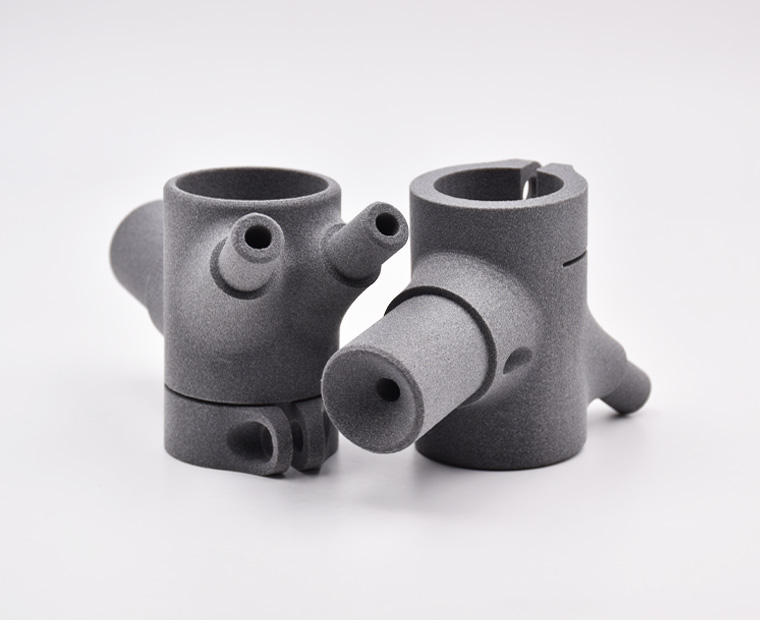
At Sculpteo, PA12 is processed with both SLS (Selective Laser Sintering) and MJF (Multi Jet Fusion) technologies, enabling fine details, complex geometries and industrial‑grade series production.
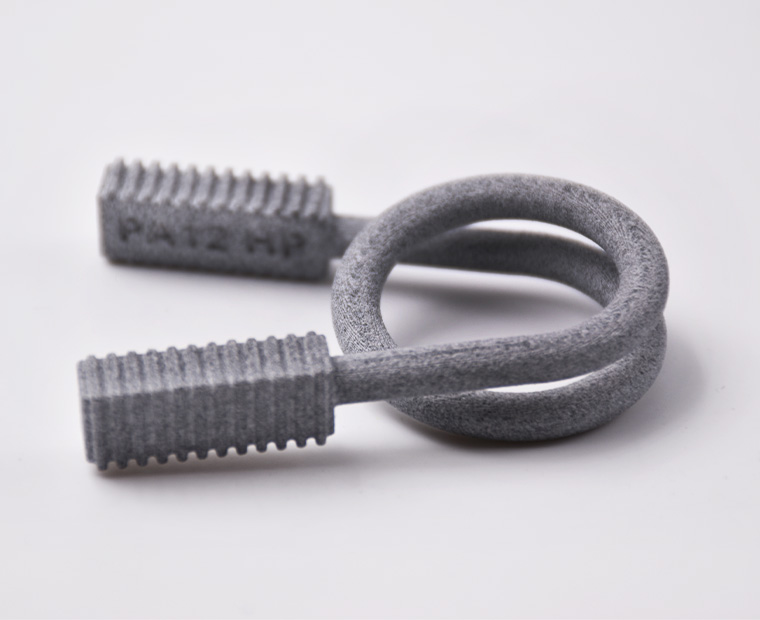
PA12 is a semi‑crystalline engineering polyamide that balances stiffness, strength and dimensional stability, making it a reference material for functional parts in both SLS and MJF.
Mechanical strength
Standard PA12 offers ~45-48 MPa tensile strength and 15-20% elongation, suitable for snap-fits and housings. Glass-filled PA12 boosts stiffness for load-bearing tools.
Thermal Stability
Melting point around 172-180°C with service temperatures up to 120°C for MJF PA12/PA12S. Glass-filled grade raises HDT for hot environments; Food Grade PA12 suits cleaning cycles up to 100°C.
Chemical resistance
Excellent against oils, fuels, greases and solvents with low moisture absorption (<1%). Ideal for automotive and industrial exposure; Food Grade PA12 Blue meets EU/FDA contact standards.
Dimensional accuracy
Tight tolerances (±0.2 mm typical) and minimum walls of 0.8-1 mm ensure precise assemblies. PA12S delivers smoother surfaces for low-friction moving parts.
Design Versatility
Supports complex geometries, living hinges (thicker than PA11) and enclosed volumes without supports. Choose glass-filled for rigidity, PA12S for aesthetics, or blue for food compliance.
Excellent balance of strength, stiffness, accuracy and cost, suitable from prototypes to series parts.
Very good chemical resistance and low moisture absorption, ideal for demanding industrial environments.
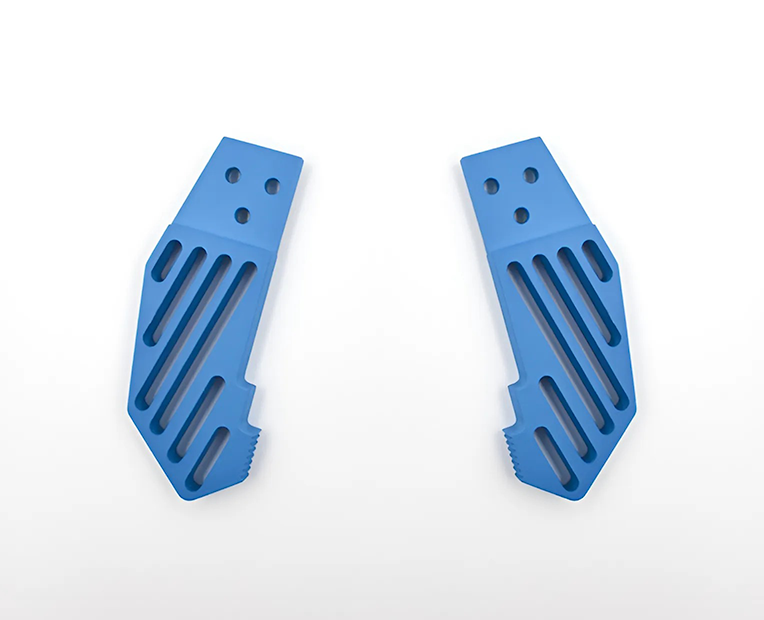
Wide range of variants: smooth MJF PA12 S, stiff glass‑filled PA12, and certified food‑grade PA12 Blue for regulated applications.
Compatible with both SLS and MJF, enabling different surface finishes, colors and throughput options.
While using SLS you can access numerous finishing option to give your an unique look and a high quality surface to your 3D printed parts
PA12 (polyamide 12) is very known of in powder‑bed 3D printing, valued for its strength, precision and versatility across prototypes, jigs and end‑use parts.
Sculpteo’s PA12 portfolio spans SLS and MJF: standard white/grey SLS PA12 for cost‑effective production, MJF black PA12/PA12S for speed and smoothness, glass‑filled for stiffness, and food‑grade blue PA12 for regulated applications.
This material’s low moisture absorption, chemical resistance and balanced mechanics make it ideal for automotive, electronics, tooling and even food‑processing components where reliability matters.
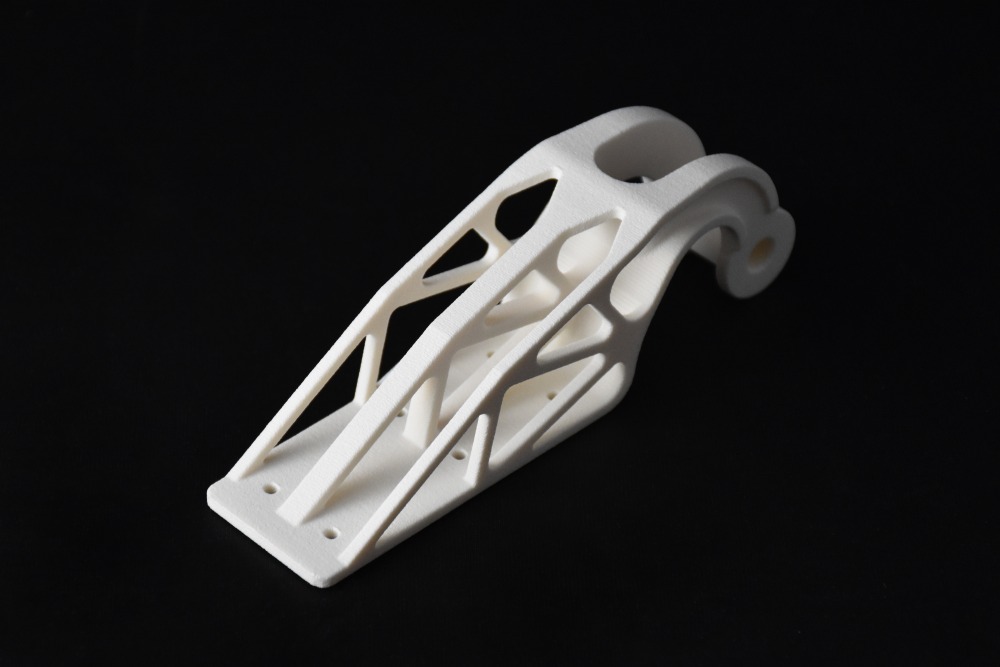
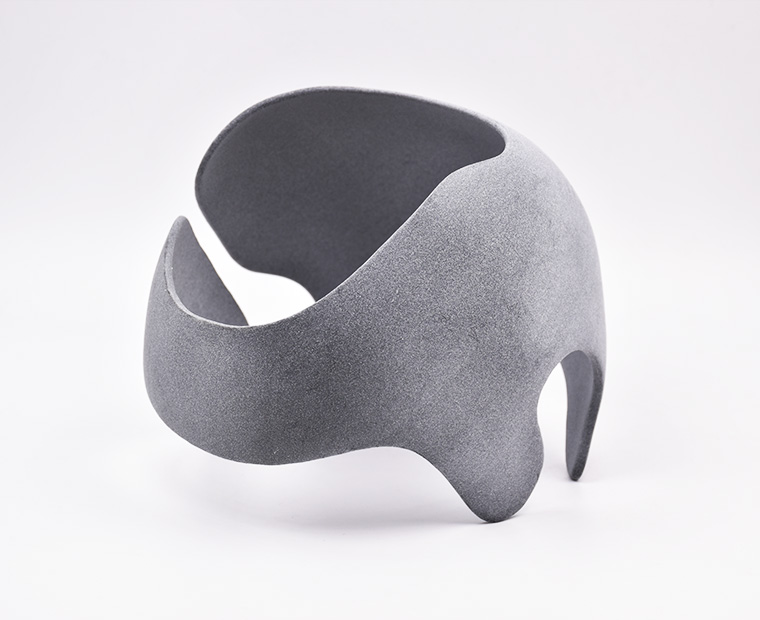
PA12 enables complex designs with interlocking features, thin walls down to 0.8 mm and no‑support overhangs up to 45°, all while matching injection molding quality at lower volumes.
When selecting a 3D printing material, PA12 serves as the versatile baseline for most functional applications due to its balanced performance and cost. It compares favorably to flexible TPU and ductile PA11, while its specialized variants like glass-filled or food-grade extend its range into stiffer or regulated uses.
| Property | PA12 (SLS/MJF) | PA12 Grey Glass‑filled | Food Grade PA12 Blue | TPU | PA11 | PA11 CF (SLS) |
| Flexibility | Moderate, semi‑rigid | Low, very stiff | Moderate | Very high, rubber‑like | Moderate, highly ductile | Very low, reinforced |
| Tensile Strength (MPa) | 45–50 | 51 | ~45 | 8–9 | 48–54 | 71–82 |
| Impact Resistance | Good | Moderate (stiffer) | Good | No break | Very high | High |
| Chemical Resistance | Excellent, low moisture | Excellent | Food‑safe compliant | Good (oils/greases) | Very good | High |
| Typical Applications | Prototypes, housings, jigs | Tooling, fixtures | Food processing tools | Flexible joints, shock absorption | Medical, hinges, mobility | Structural parts |
PA12 stands out when precision, chemical stability and production scalability matter most, while TPU or PA11 better suit high-flex or high-impact needs. Specialized PA12 grades fill gaps for stiffness, smoothness or regulatory compliance.
| Property | PA12 SLS (white) | PA12 SLS (grey) | PA12 Grey Glass SLS | PA12 MJF (black) | PA12 S MJF (smooth) | Food Grade PA12 Blue SLS | PA2210 FR SLS |
| Max build size | 300×300×590 mm | 300×300×590 mm | 300×300×590 mm | 274×370×380 mm | 274×370×380 mm | 300×300×590 mm | 300×300×590 mm |
| Density (g/cm³) | 1.0 | 1.0 | 1.22 | 1.01 | 1.01 | 1.0 | 1.06 |
| Tensile Strength (MPa) | 45 | ~45 | 51 | 48–50 | 48–50 | ~45 | ~46 |
| Tensile Modulus (MPa) | 1700 | ~1700 | 3200 | 1700–1800 | 1700–1800 | ~1700 | ~2500 |
| Elongation at Break (%) | 20 | ~20 | 9 | 17–20 | 17–20 | ~20 | ~18 |

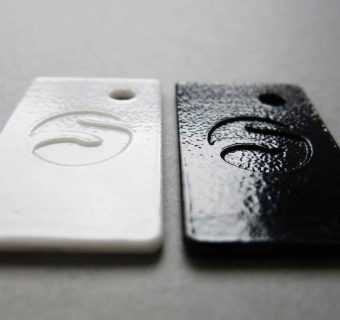
While using HP Multi Jet Fusion you can access some nice finishing option to give your an unique look and a high quality surface to your 3D printed parts

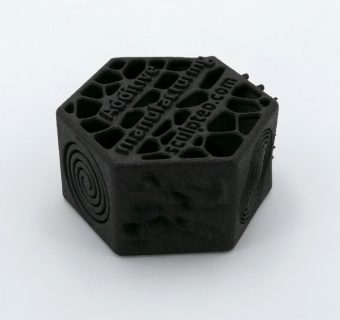
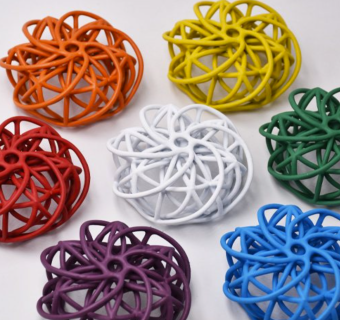
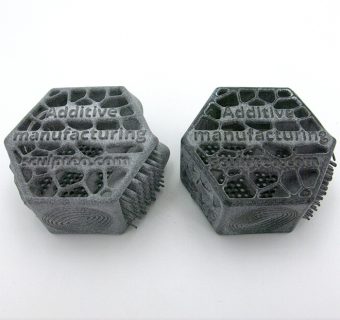
No minimum order quantity. Sculpteo accepts single prototypes up to 10,000+ parts across all PA12 variants, with instant quoting for any volume.
Use STL or OBJ format with watertight geometry. Minimum wall thickness 0.8–1 mm; uniform walls >1 mm recommended, no overhangs >45° unsupported.
Yes, standard PA12, glass-filled and food-grade variants suit end-use parts like housings, jigs, tooling and food-processing grippers due to strength and chemical resistance.
Dyeing (white/grey PA12), bead blasting, vapor smoothing (PA12S), polishing. Food Grade PA12 Blue supports food-safe finishes with declaration of conformity.
1–5 business days for prototypes (SLS/MJF), 7–15 days for production. Rush options available; instant quote shows exact timing by size, quantity and finish.
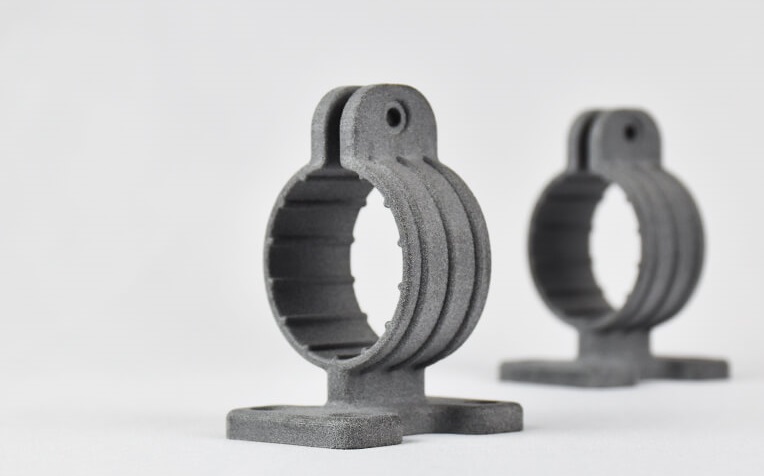
Are you looking for a plastic 3D printing technology? If you are considering MJF and SLS, let’s look more closely at their similarities and differences.
Contact our sales team for your commercial inquiries