
TPU 95A: Flexible 3D printing filament

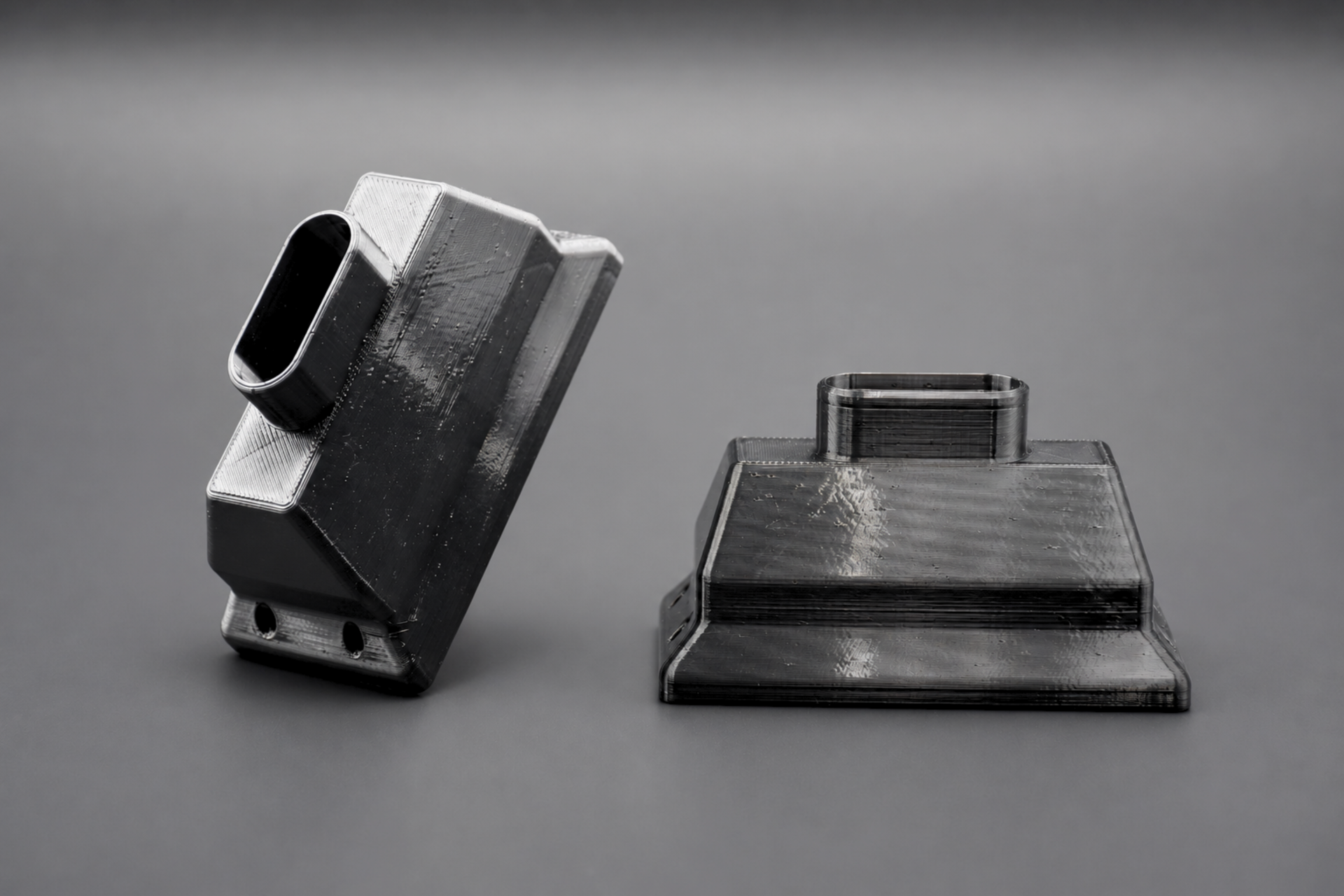
Create flexible, rubber-like parts with FDM TPU 95A. This thermoplastic polyurethane filament is a practical choice for protective covers, grips, flexible mounts, and functional prototypes that need to bend or compress during use.
Colors

Finishes

Characteristics

Surface Look
Details
Strength
Flexibility

TPU 95A filament material guide

What is TPU filament?

TPU stands for thermoplastic polyurethane. It is a thermoplastic elastomer that can bend or compress under load, making it suitable for parts that need some give during assembly or everyday use. In Fused Deposition Modeling (FDM), a heated nozzle deposits the TPU filament layer by layer.

Shore A hardness measures resistance to indentation. The flexibility of a finished part also depends on its design. A thin sleeve can bend easily during installation, while a thick section made from the same filament can feel much firmer.

Why choose TPU for FDM 3D printing?

  • Flexible fit. Design sleeves, covers, and retainers that deform temporarily during installation.

  • Stiffness you can adjust through design. Use wall thickness, ribs, and infill to control where a part bends and where it holds its shape.

  • Functional testing. Evaluate fit, grip, and compression before finalizing a design.

  • Custom geometry. Print protective profiles and flexible interfaces shaped to fit your components.

What can you 3D print with TPU?

Protective covers and sleeves
  • Protective covers and sleeves

A sleeve that flexes to fit over a housing or handle

Grips and handle sleeves
  • Grips and handle sleeves

A custom grip for testing ergonomics or fit on a tool

Bumpers, feet, and pads
  • Bumpers, feet, and pads

Flexible contact points for equipment, enclosures, or fixtures

Assembly and fit-check models
  • Flexible mounts and spacers

Parts that accommodate limited movement or compression during assembly

Mounting components
  • Clips, tabs, and retainers

Features that bend to engage a mating component

Protective covers and sleeves
  • Plugs and dust covers

Removable parts shaped to fit an opening or wrap around a feature

Pricing for TPU 3D printing

The price of your TPU part depends on its size, geometry, order quantity, and manufacturing requirements. Print time, material usage, and any support structures can also affect the cost.

Upload your 3D file to Sculpteo to request a quote. Include any critical dimensions and indicate where the part needs to bend, stretch, or compress.

How does TPU FDM 3D printing work?

The printer feeds the TPU filament through a heated nozzle and follows toolpaths generated from your 3D model. It builds the part layer by layer. Overhangs and bridges may require temporary supports, which are removed after printing.

The outer walls form the shell, and the infill forms the internal structure. Both affect how the part deforms under load. Build orientation also determines how the layer bonds align with the direction of the load, which matters for features that bend or stretch repeatedly.

Colors, finishes, and surface appearance

FDM TPU parts typically show layer lines, especially on curved or sloped surfaces. Areas that contact the build plate or require supports can have a different texture from exposed walls. Flag any visible faces, contact surfaces, or tight-fitting interfaces when submitting your project.

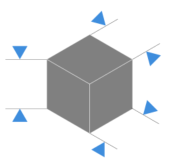
Maximum size
– Raw

340 x 320 x 340 mm

maximum size icon

The maximum size of your models are limited by the physical size of our 3D printers – If you’d like to produce larger parts, please contact us!

Standard Layer thickness: 1 mm

Standard NFT 58000

Normal class (category 3)

Dimension mmPossible deviation  (mm)
x ≤ 1±0,13
1 < x ≤ 3±0,15
3 < x ≤ 6±0,17
6 < x ≤ 10±0,20
10 < x ≤ 15±0,22
15 < x ≤ 22±0,25
22 < x ≤ 30±0,28
30 < x ≤ 40±0,32
40 < x ≤ 53±0,37
53 < x ≤ 70±0,44
70 < x ≤ 90±0,50
90 < x ≤ 115±0,60
115 < x ≤ 150±0,75
150 < x ≤ 200±0,95
200 < x ≤ 250±1,20
250 < x ≤ 315±1,40
315 < x ≤ 400±1,80
400 < x ≤ 500±2,20

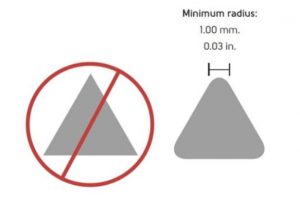
Knife edges/pointed edges will likely to fail during the print process. Round all knife edges with a 1.00 mm (0.03 in.) radius to avoid failing edges.

Minimum wall thickness:

1.2 mm
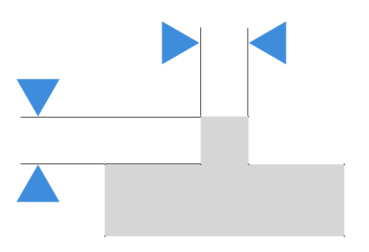
Stemmed elements with support:

1.25 mm
Stemmed elements without support:

1.25 mm

minimum thickness 1
minimum thickness 2

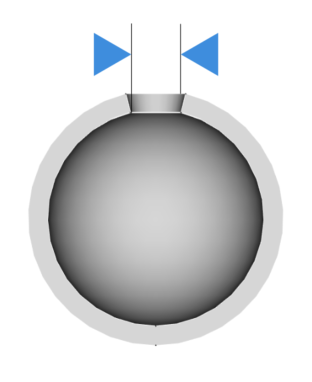
Minimum height and width details: Embossed : 3mm
Engraved : 0.8

Ratio Depth / width: N/A

etching embossing 1etching embossing 2 

Enclosed parts? No

Interlocking parts? No

enclosed parts & interlocking volumes

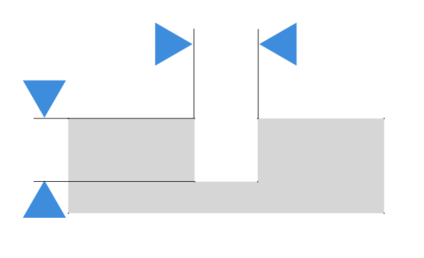
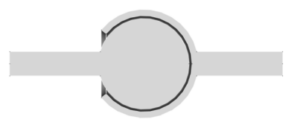
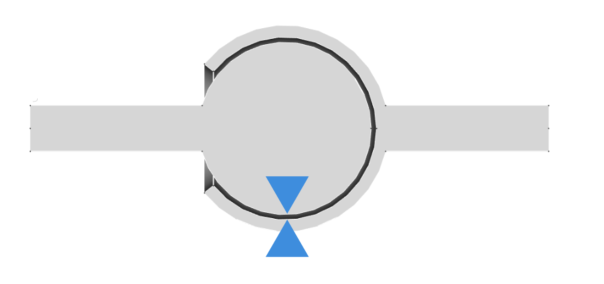
Minimum spacing between fixed walls:

0.5 mm
Minimum clearance between parts:

0.5 mm

minimum spacing & clearance

Hollowing? No

hollowing

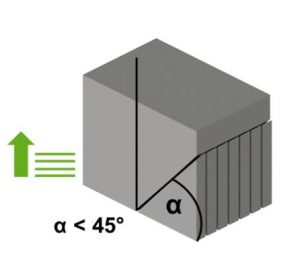
Angles under 45° require support structures.

Please keep in mind that surfaces that have connection with support won´t be as smooth as the surfaces without support.

overhangs & inside edges

Support structures on edges, holes and corners are difficult to remove and sometimes it is not possible to do so.

PropertyTypical valueReported test method
Density1.16 g/cm³ at 23 °CISO 1183 / GB/T 1033
Shore hardness95 AISO 7619-1 / GB/T 531.1
Tensile stress at 100% elongation — XY13.24 ± 0.29 MPaISO 37 / GB/T 528
Tensile strength — XY23.11 ± 0.63 MPaISO 37 / GB/T 528
Elongation at break — XY462.3 ± 21.1%ISO 37 / GB/T 528
Melt flow index9.3 g/10 minAt 185 °C under a 1.2 kg load
Equilibrium water absorption0.69%Method not specified

Frequently asked questions

Is TPU 95A flexible?

Yes. TPU 95A is a flexible elastomer. A thin sleeve can bend easily, while a thick bumper with dense infill can feel relatively firm. To compare grades, test parts with the same geometry, wall thickness, and infill.

    What is the difference between TPU 90A and TPU 95A?

    TPU 90A has lower Shore A hardness and indents more easily under the same test conditions. TPU 95A offers a firmer feel. Wall thickness and internal structure also influence how the finished part bends or compresses.

    Can I use 3D printed TPU for seals or gaskets?

    FDM TPU can be used to prototype gasket geometry and check fit or compression. If the final part must hold pressure or prevent leaks, test it for leakage, sustained compression, and compatibility with the fluid or environment.

    What is the difference between FDM TPU and SLS or MJF TPU?

    FDM uses TPU filament and may require temporary supports. Selective Laser Sintering (SLS) and Multi Jet Fusion (MJF) use TPU powder. The surrounding powder supports the part during printing, which can help with complex geometries. When selecting a process, consider the available Shore hardness, surface finish, geometry, and order quantity.

    How do I order TPU parts on Sculpteo?

    Upload your 3D model to Sculpteo and select FDM TPU 95A for your quote. Include critical dimensions and describe how the part needs to flex or fit with other components.

    Ready to 3D print with TPU filament material?

    With Sculpteo’s online 3D printing service you’re just a few clicks away from professional TPU 95A printing. Your 3D model is printed with the highest quality and delivered straight to your door. 

    Get started now to get your TPU 95A prints!

    Discover our other plastic materials...